Blog

Notes from behind the counter.

Pricing, inventory, staffing, and the small operational things that decide whether a food business makes money.
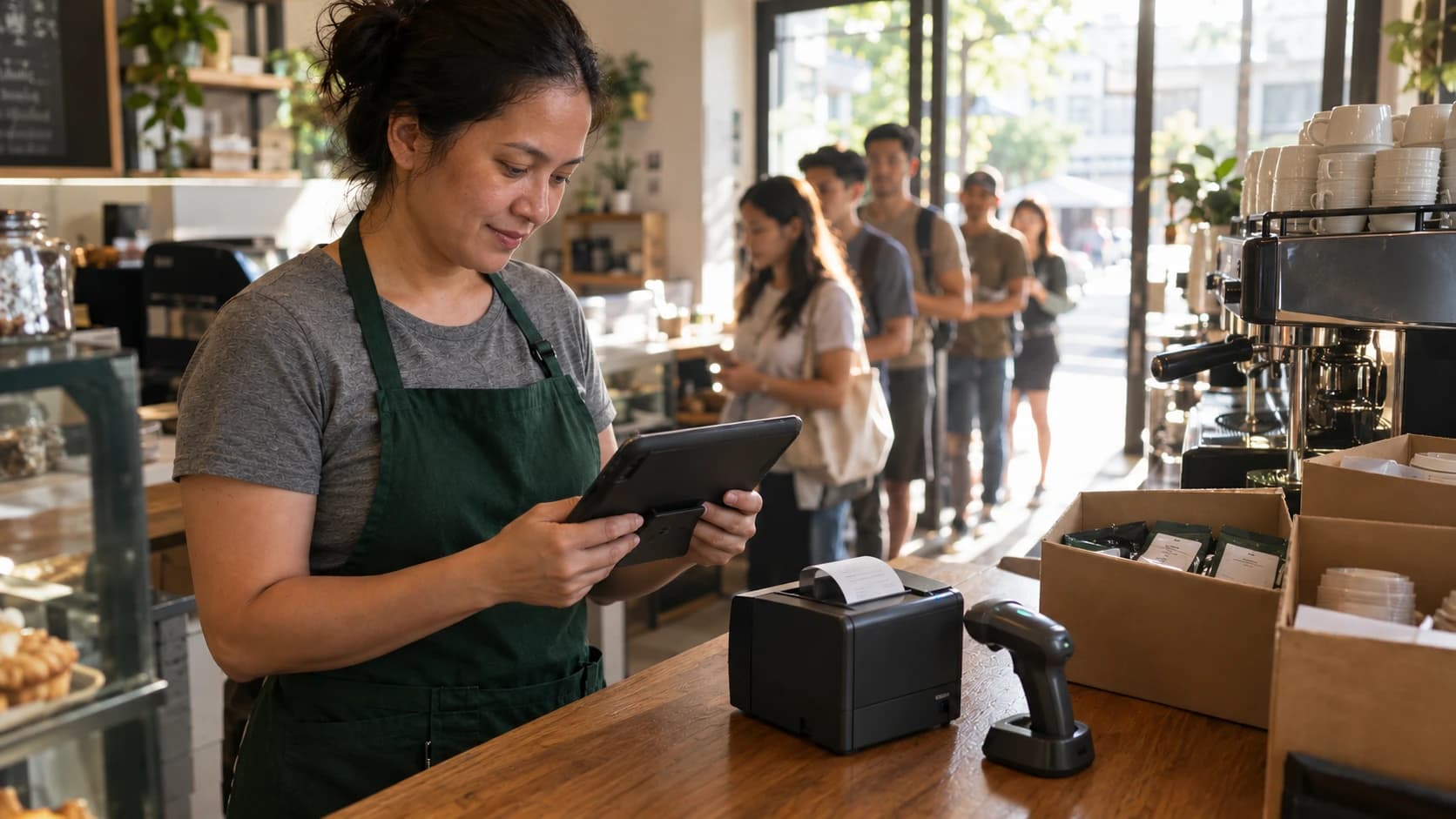
A café owner in a dark green apron over a grey t-shirt stands behind a wooden counter in the morning, looking down with a small focused smile at the tablet POS she holds in both hands. Behind her a queue of five customers waits, backlit by the sunlit street through the open glass doors. On the counter sit a receipt printer, a barcode scanner in its stand and open cardboard boxes of coffee bags and cups, with a pastry display case to her left and an espresso machine with stacked cups to her right.

Jott Myth · October 13, 2026 · 12 min read

What to do when business picks up after two slow months

For a shop owner whose sales are finally recovering after a bad stretch. How to tell a real recovery from one good fortnight, why profit and cash both get worse before they get better, what order to spend the money in, and which slow-month habits to keep.

Read post
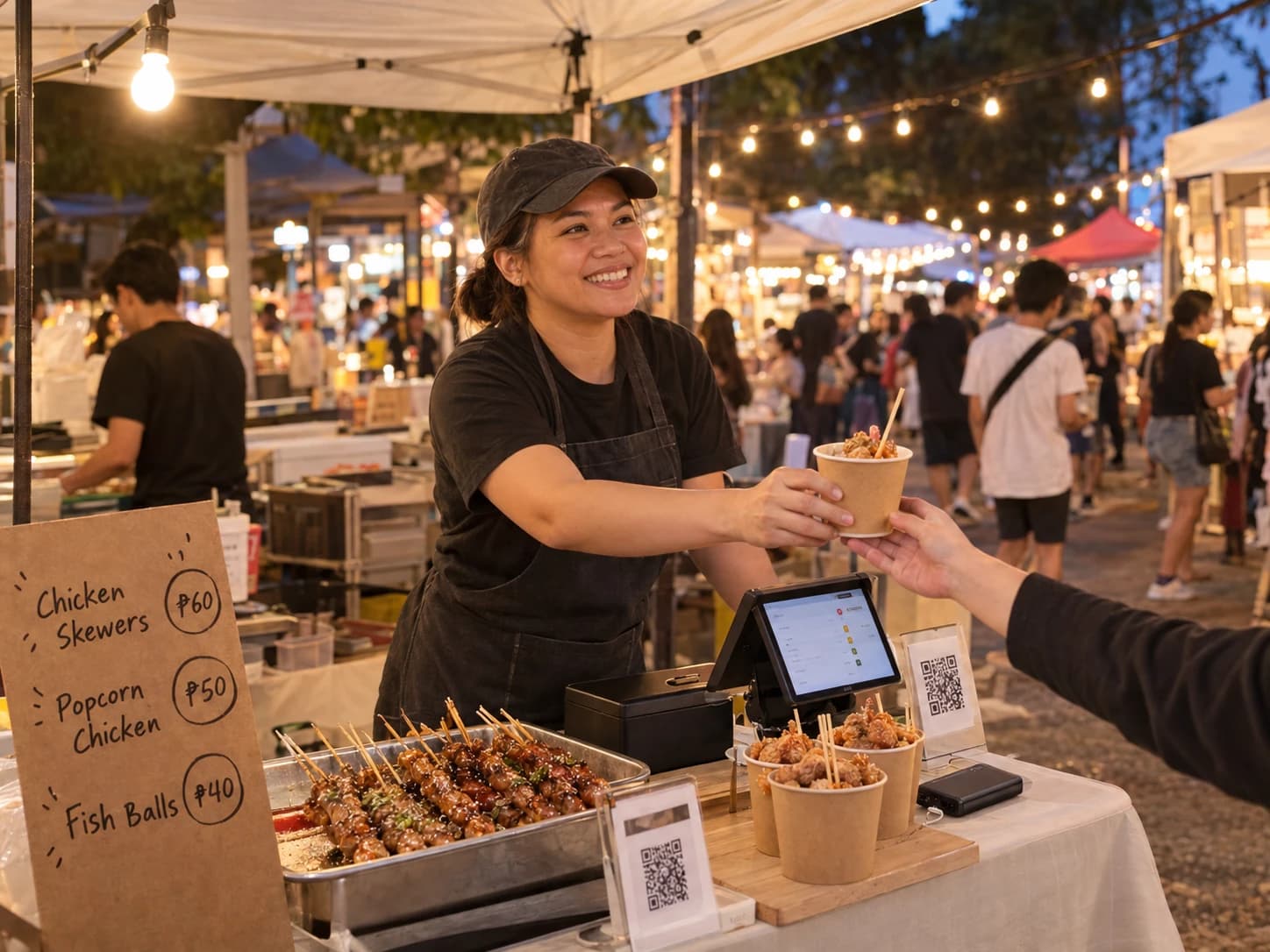
A smiling stall owner in a black cap and apron hands a paper cup of popcorn chicken across her table at a pop-up stall in a busy night market, with a tray of chicken skewers, a handwritten menu board of three items, a tablet till, a cash box, QR code payment signs and a power bank in front of her, and a crowd walking under string lights behind.

Jott Myth · October 12, 2026 · 11 min read

How to run a pop-up food stall at a weekend market and actually make money

For anyone selling food at a weekend or night market, from Mercato Centrale and Banchetto in Manila to a food bazaar anywhere. What a stall costs, how many sales cover it, what to sell, how much stock to bring, and how to take payment when the signal drops.

Read post
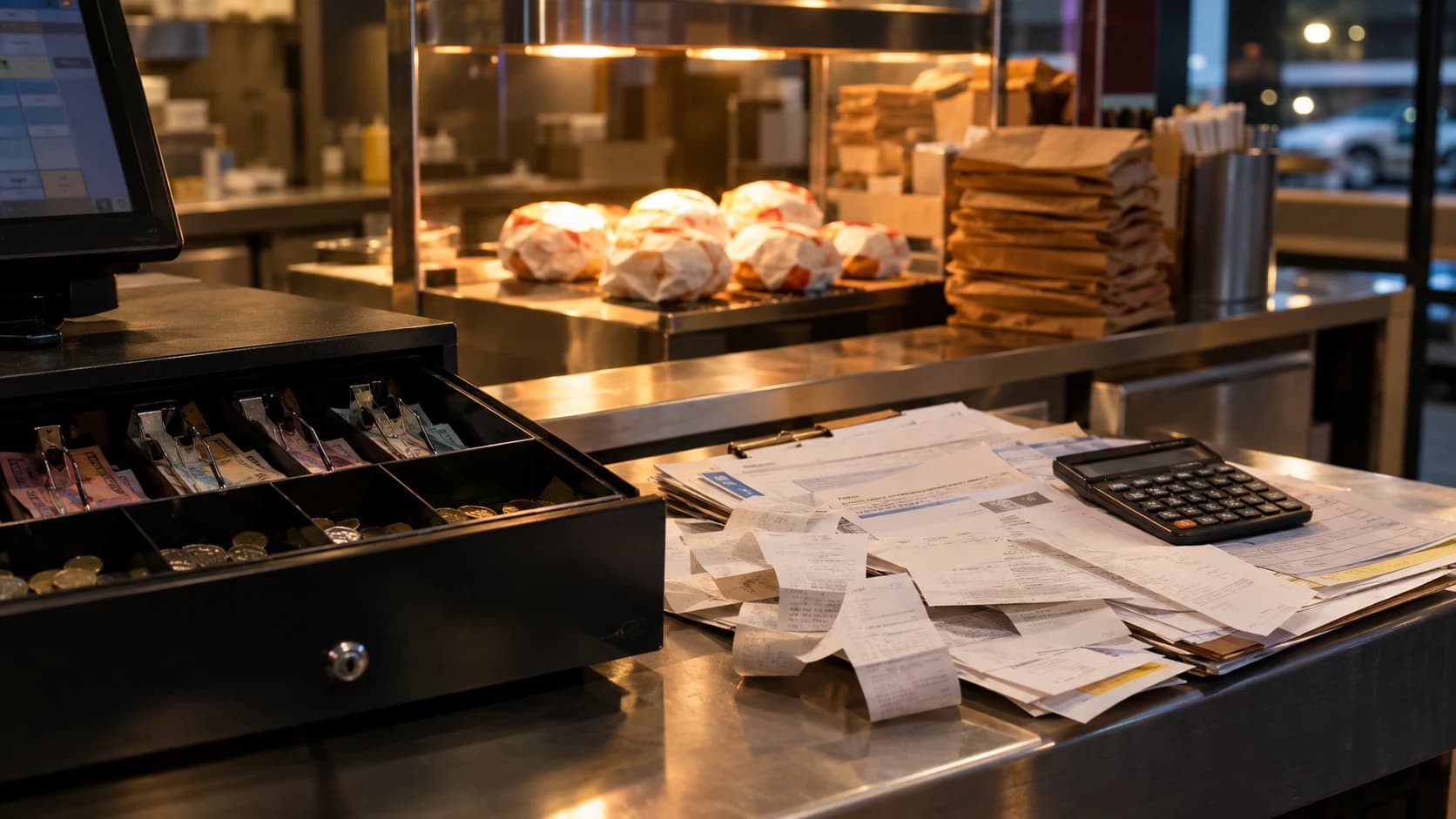
A burger shop's stainless steel counter at closing time, with an open cash drawer of banknotes and coins beside a pile of invoices, bills and curling receipts with a calculator on top, and wrapped burgers under a heat lamp next to a stack of paper delivery bags behind.

Jott Myth · October 9, 2026 · 8 min read

High revenue, but losing money — how a busy shop goes negative without noticing

For food business owners whose shop is busy and whose sales look strong, but who still never seem to have money. A worked example of how $39,000 a month in revenue turned into a $3,095 monthly loss, and how to see it in your own numbers.

Read post
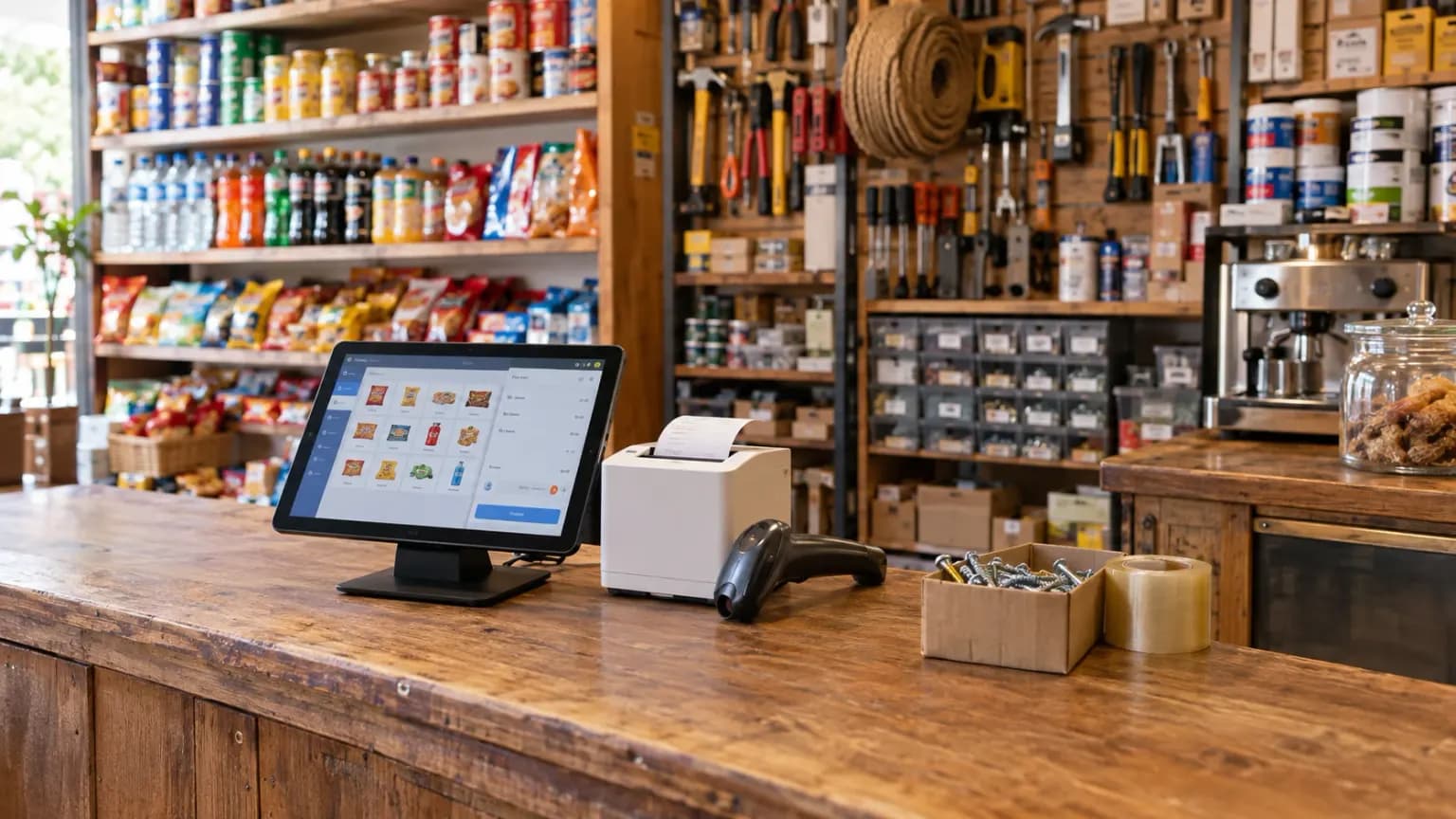
The worn wooden front counter of a small general store, with a tablet on a stand showing a till screen of product tiles, a small white receipt printer with a receipt curling out, a handheld barcode scanner, a cardboard box of screws and a roll of clear tape. Behind it, shelves of tins, bottled drinks and bags of crisps sit beside a hardware wall of hammers, pliers and screwdrivers, a coil of rope, paint tins and drawers of fixings, with an espresso machine and a glass jar of biscuits on a side counter.

Jott Myth · October 7, 2026 · 16 min read

How to start a small shop: what to decide, in what order, and when to open

For anyone opening a café, food stall, corner shop, general store or hardware store — what to decide first, how much money to have ready, how to work out the sales you need each day, what hardware and POS you actually need, and when to open the doors.

Read post
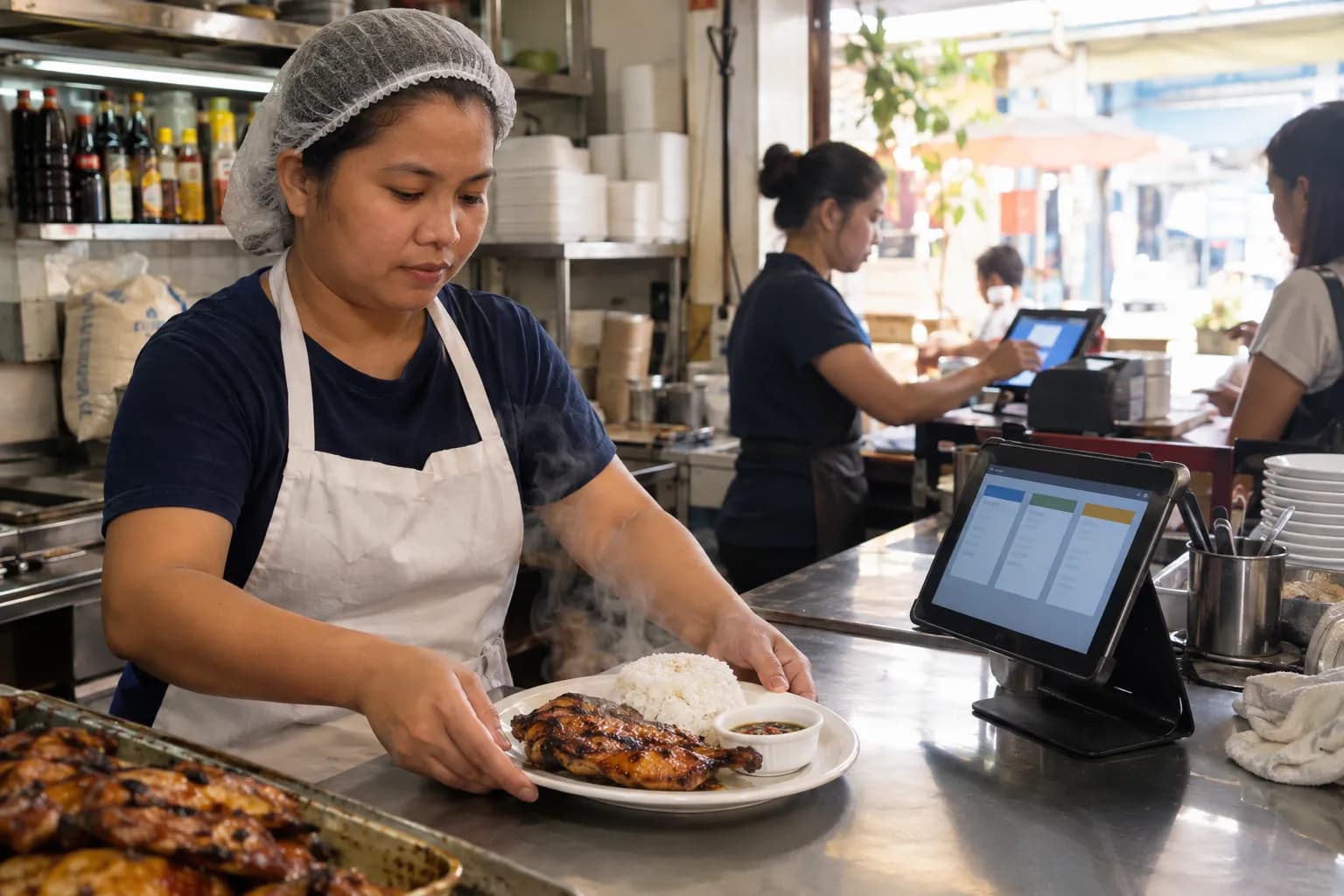
A cook in a hairnet and white apron sets a steaming plate of grilled chicken, rice and a dish of dipping sauce on the stainless steel pass of a small eatery, beside a tray of grilled chicken and a tablet on a stand showing three columns of kitchen order tickets. Behind her, a cashier taps an order into a second tablet at the front counter next to a receipt printer, with shelves of sauces, a rice sack and stacked takeout containers along the wall.

Jott Myth · October 5, 2026 · 11 min read

Why a restaurant needs a restaurant POS, not a retail one

A retail POS assumes you sell what you buy. A restaurant sells what it makes. Here is what that difference means for stock, food cost and the kitchen in a small restaurant, café, food truck or bubble tea shop — and what to ask before you choose a POS.

Read post
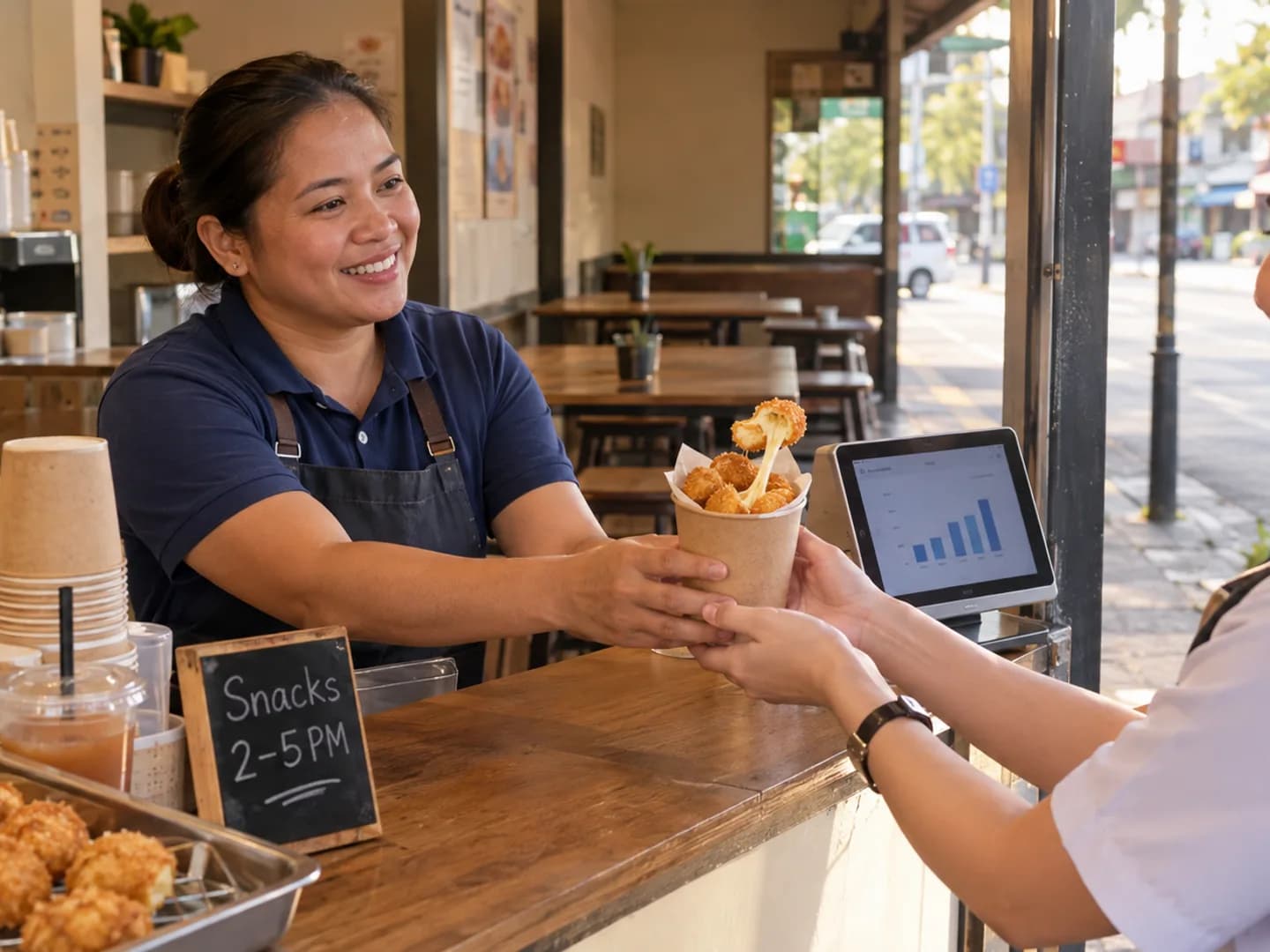
A Filipino snack-stall owner in a navy polo and apron hands a paper cup of chicken cheese pops to a customer across the counter in the quiet mid-afternoon, with a tablet POS showing a bar chart, a chalkboard sign reading Snacks 2-5PM and a tray of fresh fried pops beside them.

Jott Myth · October 3, 2026 · 7 min read

Your slow hours are not dead hours. Sell them a different menu.

The 2pm to 5pm lull is usually lunch's hangover, not a lack of customers. How one shop read its peak-hours chart, built a snack menu for that window, and what to check before calling it a win.

Read post
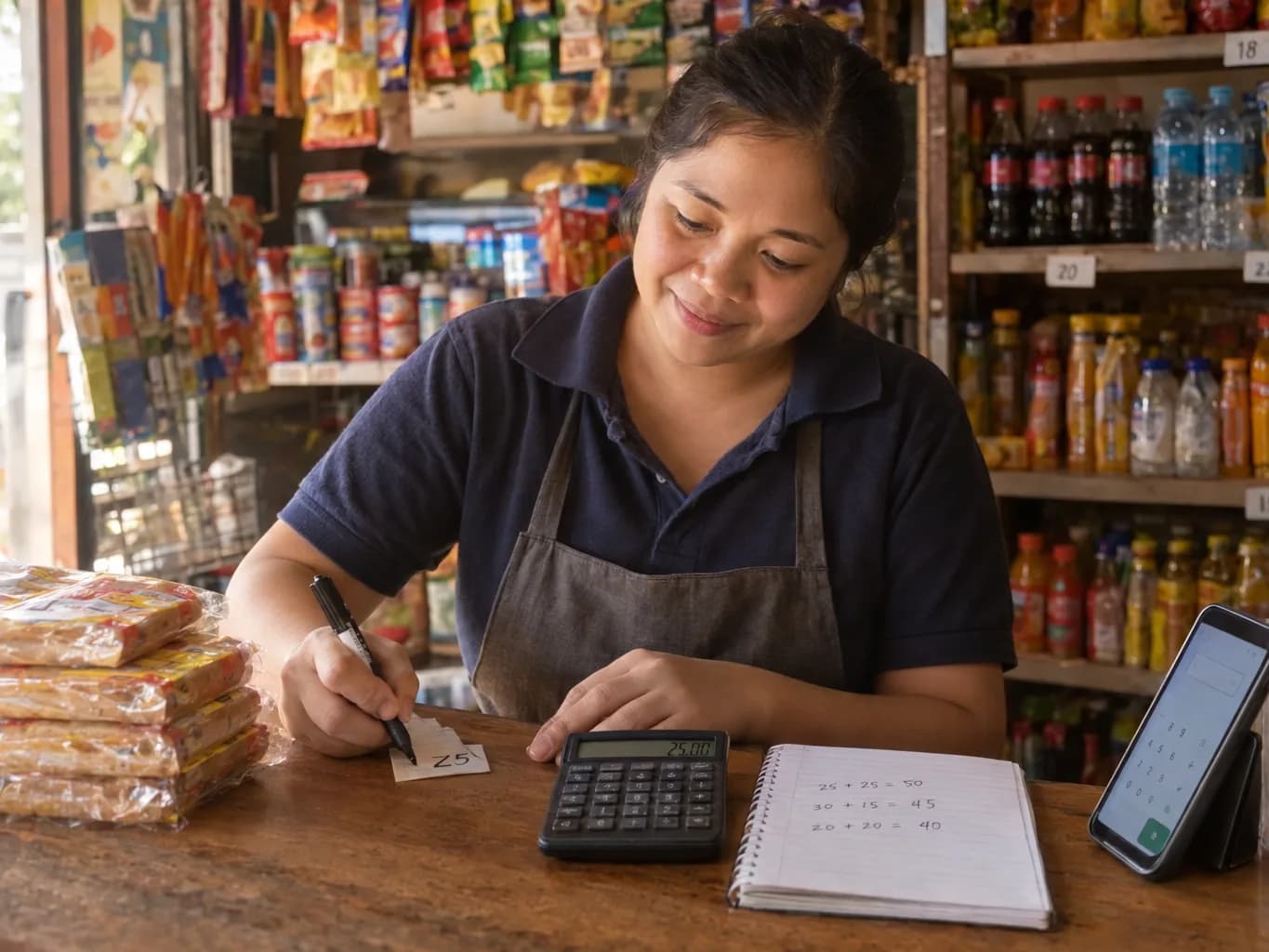
A smiling shop owner in an apron writes a price on a small paper tag at her wooden counter, with a stack of packaged snacks to her left, a calculator, a notebook of handwritten sums and a phone on a stand to her right, and shelves of drinks and snacks behind her.

Jott Myth · October 1, 2026 · 8 min read

Margin vs. markup — which one should you use to price your products?

They sound the same and give different prices. Here is the difference, when each one is the right tool, and how to avoid the mistake that quietly costs small shops a fifth of their profit.

Read post
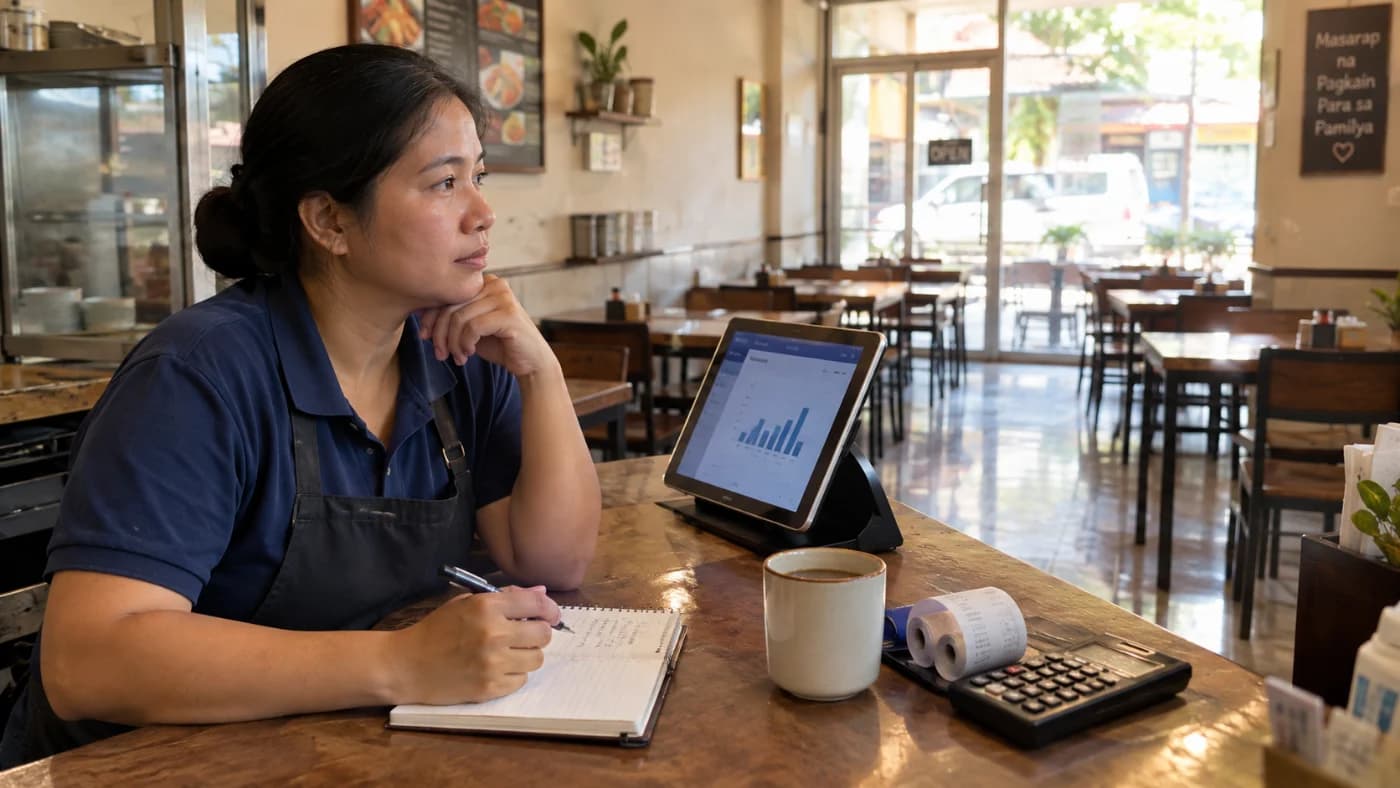
A Filipino eatery owner in a navy polo and apron sits at the end of her counter in the quiet afternoon, chin resting on one hand and a pen in the other over an open notebook, looking out at her empty dining room. A tablet POS on a stand beside her shows a bar chart, with a mug of coffee, a receipt roll and a calculator on the counter, and a sign on the wall reading "Masarap na Pagkain Para sa Pamilya".

Jott Myth · September 29, 2026 · 9 min read

How to build a strategy when sales are slow

A slow month produces a lot of activity and not much of a plan. Here is how to let your own numbers pick the one thing worth changing, set a target you can actually check, and find out in two weeks whether it worked.

Read post