Your slow hours are not dead hours. Sell them a different menu.
October 3, 2026 · Jott Myth · 7 min read
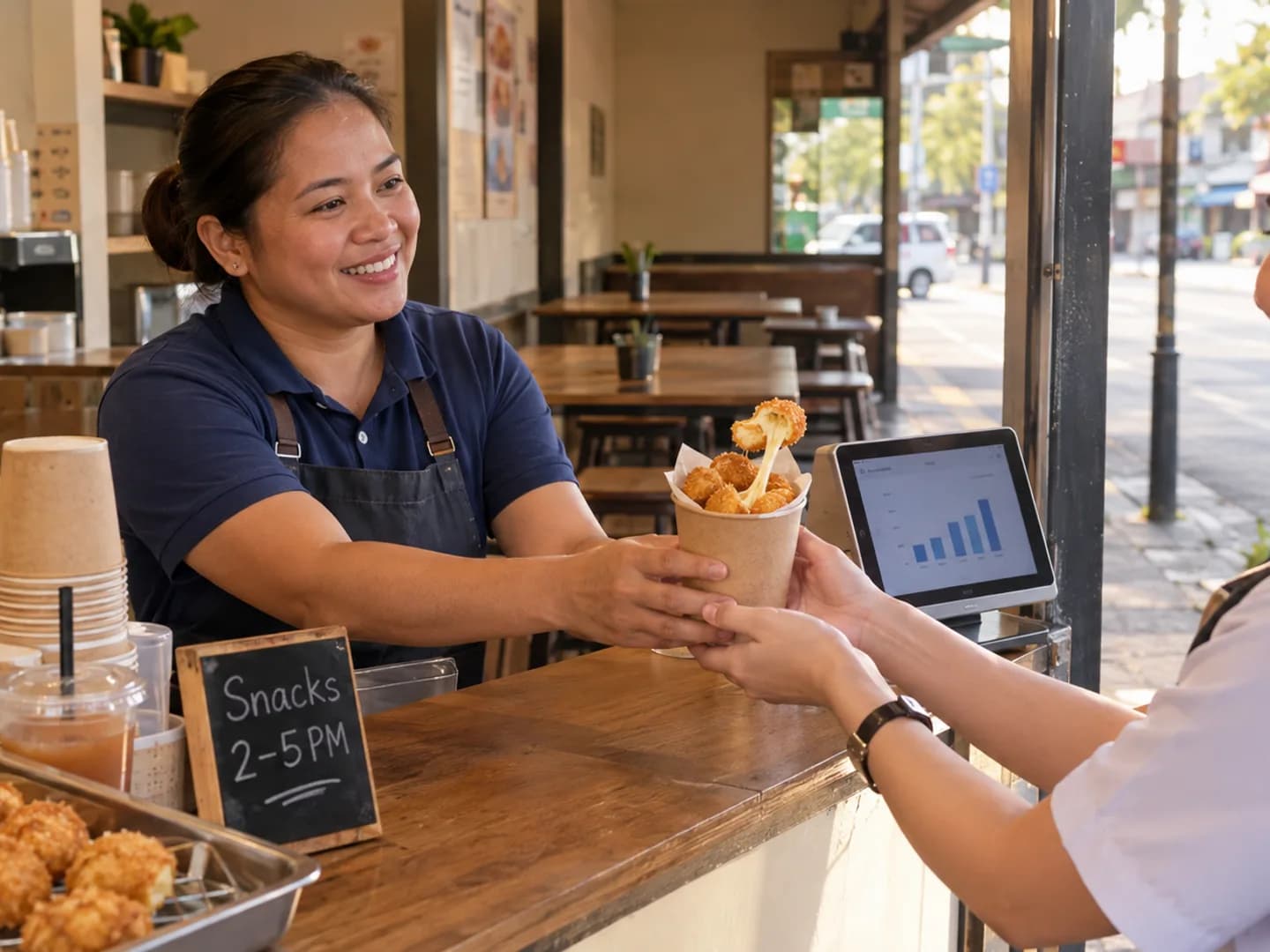
In short: if your afternoons go quiet after lunch, try a small, cheap, fast snack menu for those hours instead of waiting them out. I started one for 2pm to 5pm, led by chicken cheese pops, and it now sells well in a window that used to be empty. Check your peak hours first, cost the item properly, then judge it against the same weekdays, your margin and the hours either side.
Every food shop has a stretch of the day that feels like a mistake. The lunch rush is over, the dinner crowd has not started, and the counter goes quiet. For a lot of shops here it is roughly 2pm to 5pm, and the usual response is to wait it out, send someone on break, and call it normal.
I looked at those afternoons differently. My Analytics page showed the same thing every week: sales dropped sharply after lunch.
For a long time I called that stretch dead. Then I stopped waiting for it to end and asked a kinder question. Not "how do I get more people in?", but "what would someone who has already eaten lunch actually want?"
Why is my shop quiet after lunch?
A quiet afternoon can mean two different things, and they need different fixes.
- Nobody is around. Offices are empty, the street is dead. A new menu will not help much, because there is no one to sell it to.
- People are around, but they just ate. The foot traffic is there. What is missing is a reason to buy, because your menu is built for hunger and they are not hungry.
The Peak Hours Analysis in Analytics tells you which one you have. If the dip is shallow on some days and deep on others, or if your afternoons hold up better than your late evenings, the people are probably there. That was the case for me: customers did walk past and some did come in, but they bought little, because a full meal at 3pm is a hard sell.
Why does a snack menu work in slow hours?
The reasoning was simple. It is past lunch, so a rice meal feels like too much. But a lot of people are mildly hungry, or bored, or meeting someone, or heading home from school or work. They will happily spend a small amount on something easy to eat.
So I built a short snack menu for those three hours, and the anchor item was chicken cheese pops.
A few things make an item like that work in a slow window:
- It is small and priced to match. An afternoon snack that costs as much as a meal is just a meal.
- It uses what you already stock. Chicken and cheese were already on the shelf for the regular menu, so there was no new supplier and little new waste.
- It is fast. Pops fry quickly, so one person can run the counter and the fryer without the queue building.
- It is easy to take away. A cup of pops is something you eat while walking.
None of that is specific to chicken. The same logic works for fries, siomai, banana cue, small drinks, or whatever your kitchen already does well in small portions.
How do I set up a snack menu in Kasenso?
You do not need a second shop or a second system. In Kasenso it is the same menu with a different category.
- Create a Snacks category. Categories are the tabs across the top of the POS screen, so the cashier sees the snack items in one place. See set up your menu and recipes.
- Add the item with a recipe. Link the chicken, cheese and cup to a recipe so every sale takes the right amount off your stock and you see the real cost, not a guess.
- Price it from the cost, not the vibe. Check the margin before you print a menu board. Price Lab will test a price against your sales history, and the free pricing calculator works without an account.
- Tell people. A small board or a line on your online store that says what is available and when. A snack menu nobody knows about is a slow hour with extra effort.
How do I know if a new menu item is working?
"It is selling good" is a fine feeling and a poor measurement. A snack menu can look busy and still lose you money, or it can quietly steal from your dinner sales. Four checks answer that, and all of them are in numbers you already have.
1. Did the 2 to 5pm hours go up? Open Peak Hours Analysis and compare the window before and after you launched. Compare the same weekdays, not yesterday against today, because a Tuesday and a Saturday are different shops.
2. Is it new money or moved money? If your lunch sales fell by the same amount the snacks brought in, the menu moved sales around rather than creating them. Look at the hours on either side of the window. Lunch holding steady while the afternoon grew is the result you want.
3. What is the margin? Your product report ranks items by revenue and by profit, and the two lists are rarely the same. A popular item with a thin margin is a lot of work for little. Cooking oil and cups add up.
4. Is anyone adding to the order? The best snack result is not a lone cup of pops. It is pops plus a drink. Watch your average order value in the window. A snack that sells a drink with it is worth noticeably more than one that does not.
Give it a fair window. Two weeks is the minimum, and a full pay cycle is better. A single wet afternoon or a school holiday can make any new item look like a hit or a flop.
What do I do with the results?
At the end of the window there are only three honest answers.
- It is selling and it is profitable. Keep it. Write the portion and the price down so the next person on shift makes it the same way.
- It sells but the margin is thin. Adjust the portion, the price, or the cheapest part of the recipe before you promote it harder.
- It is selling better than you expected. Scale carefully. Check that you can actually produce more at 3pm without wrecking prep for dinner, and that you will not run out of the one ingredient it depends on.
Then try the next idea. A snack menu that works is also a template: a second item, a combo with a drink, a different window on a different day.
The short version
A quiet afternoon is often just a menu mismatch. Look at your peak hours first to see whether people are actually there, then build something small, cheap and fast for the hour they are in. Cost it properly, tell people about it, and judge it by the same weekdays, the margin and the neighbouring hours, not by how busy it feels.
Kasenso keeps your hourly sales, product ranking and recipe costs in one place, so the slow hour becomes something you can read and act on, on the free plan, permanently.
Frequently asked questions
What snacks sell best in slow afternoon hours?
Small, cheap, fast items that are easy to eat on the move: fried bites, fries, siomai, banana cue, or a small drink. Pick something your kitchen already makes well, so you add no new supplier and little waste. Mine is chicken cheese pops.
How do I know if a new menu item is working?
Compare the hours it was meant to fill against the same weekdays before you launched, then check three more things: whether the neighbouring hours dropped, whether the item's profit margin holds up, and whether customers add a drink. Revenue alone can hide an item that moves sales around or earns very little.
How long should I test a new menu item?
At least two weeks, and a full pay cycle is better. A single rainy afternoon or school holiday can make any new item look like a hit or a flop.
What time is the slowest for a restaurant?
It depends on the shop, which is why you check your own Peak Hours Analysis rather than trusting a rule. For many shops in the Philippines the quiet stretch falls between lunch and dinner, often around 2pm to 5pm.
Can I run a snack menu without a second shop or system?
Yes. In Kasenso it is the same menu with one extra category and the items linked to recipes, so your stock and costs stay accurate. Nothing separate to set up.